

Introduction
Festive seasons in India, particularly around Diwali, are a critical period for e-commerce giants. The competitive terrain requires creative approaches to attract and keep clients. Flipkart, one of India’s leading e-commerce platforms, has successfully leveraged influencer marketing to promote its positive season movements. This blog examines how Flipkart has harnessed the power of influencers to drive deals, increase brand understanding, and create interesting content during these crucial years.
The Power of Influencer Marketing
Influencer marketing concerns collaborating with people who have a powerful following on social media to advertise products or services. These influencers, who can vary from celebrities to micro-influencers, help brands get a wider audience in a better original, and relatable manner. The key benefits of influencer marketing have:
1. Increased Trust and Credibility: Influencers have created trust with their followers, making their acceptance more credible.
2. Wider Reach: Influencers can help brands tap into various and larger audiences.
3. Engagement: The influencer range usually generates higher engagement rates compared to traditional advertising.
4. Cost-Effective: Reached to traditional advertising, influencer transactions can be more cost-effective and deliver a more profitable recovery on investment (ROI).
Flipkart’s Festive Season Campaigns
During the festive season, Flipkart moves out comprehensive marketing drives to catch the attention of shoppers. These campaigns often have discounts, unique offers, and a combination of interesting content. In current years, influencer trade has become a major part of these strategies.
1. Building Buzz with Influencers
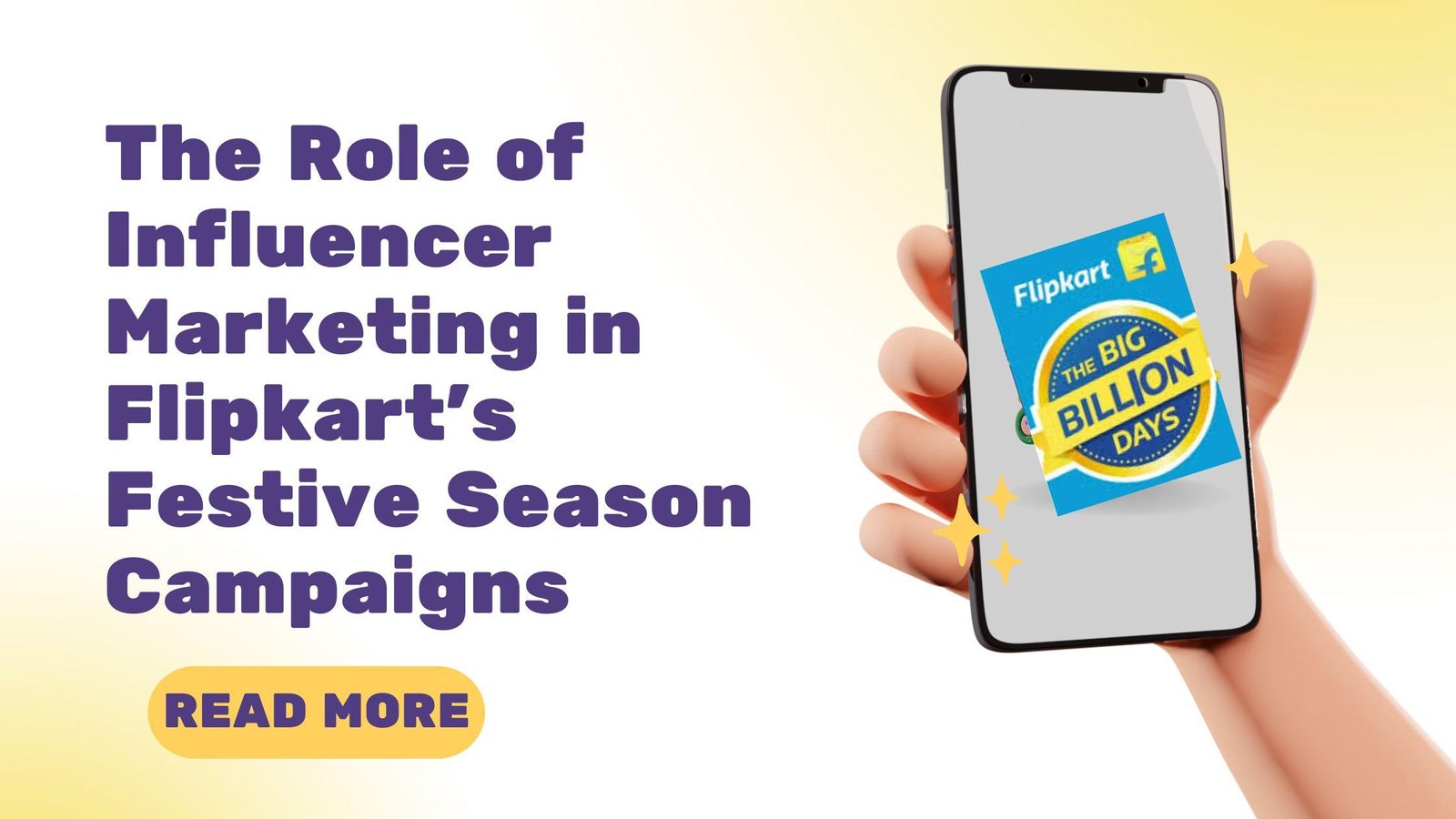
Flipkart collaborates with a diverse group of influencers, including stars, fashion bloggers, tech reviewers, and lifestyle influencers. For example, during the Big Billion Days, Flipkart performed with Bollywood stars and top-tier influencers to create tension and excitement. These influencers share teasers, unboxing videos, and exclusive previews, causing buzz and causing traffic to Flipkart’s platform.
2. Tailored Content for Different Audiences
Understanding that different audiences have individual preferences, Flipkart provides that influencer content is tailored accordingly. Fashion influencers showcase clothes and accessories available on Flipkart, while tech influencers review the latest devices and electronics. This targeted process ensures that the content echoes with various parts of Flipkart’s client base.
3. Interactive Campaigns and Challenges
Flipkart has also leveraged interactive movements and challenges to engage users. For instance, during the joyous season, Flipkart often launches hashtag challenges on media like Instagram and TikTok. Influencers experience these challenges and encourage their supporters to join in, creating a viral effect. These campaigns not only increase employment but also improve brand visibility.
4. Real-Time Engagement
Live sessions and real-time attention have become a substantial part of Flipkart’s influencer commerce strategy. Influencers host live sessions on social media outlets, discussing deals, showcasing products, and interacting with followers. These sessions deliver quick answers to possible customers’ questions and create a feeling of urgency, driving sales.
5. Behind-the-Scenes Content
Behind-the-scenes (BTS) content offers a peek into the trials and excitement ringing Flipkart’s festive drives. Influencers share BTS footage, including hold tours, packaging methods, and sneak peeks of forthcoming deals. This content humanizes the brand and creates a more serious connection with the audience.
Case Studies: Successful Influencer Campaigns
1. The Big Billion Days with Virat Kohli .
In 2020, Flipkart collaborated with Indian cricket captain Virat Kohli for their Big Billion Days campaign. As a highly influential sports personality, Kohli’s association added immense value to the campaign. He shared promotional content across his social media platforms, participated in live sessions, and engaged with fans through interactive posts. The campaign saw a significant increase in traffic and sales, demonstrating the impact of a well-executed influencer strategy.
2. Fashion E-commerce with Style Influencers
For the fashion segment, Flipkart partnered with notable style influencers like Komal Pandey and Santoshi Shetty. These influencers curated festive looks using products known on Flipkart and transferred styling tips to their followers. Their original and relatable range echoed with fashion enthusiasts, driving traffic to the fashion section of Flipkart and increasing sales.
3. Tech Reviews with Geeky Ranjit and Technical Guruji
In the tech domain, Flipkart’s partnerships with tech reviewers like Geeky Ranjit and Technical Guruji have been positively effective. These influencers reviewed the latest gadgets and electronics available during the festive sales, providing detailed insights and recommendations. Their expert opinions helped build trust and informed purchasing decisions among tech-savvy consumers.
Measuring the Impact
Flipkart employs various metrics to measure the success of its influencer marketing campaigns. These include:
1. Engagement Metrics: Likes, comments, shares, and views on influencer posts.
2. Traffic: Increase in website traffic and app downloads during the campaign period.
3. Sales: Uplift in sales and conversion rates attributed to influencer marketing.
4. Brand Mentions: Frequency and sentiment of brand mentions across social media platforms.
5. ROI: Overall return on investment from the influencer collaborations.
Challenges and Future Directions
While influencer marketing offers numerous benefits, it also comes with challenges. Ensuring authenticity and transparency is crucial, as followers can quickly detect insincere endorsements. Moreover, managing multiple influencer partnerships requires meticulous planning and coordination.
Looking ahead, Flipkart is likely to explore emerging trends in influencer marketing, such as:
1. Micro-Influencers: Collaborating with micro-influencers who have smaller but highly engaged followings.
2. Long-Term Partnerships: Building long-term relationships with influencers to create more consistent and authentic content.
3. Data-Driven Strategies: Leveraging data analytics to identify the most effective influencers and optimize campaign performance.
Conclusion
Influencer marketing has become a cornerstone of Flipkart’s festive season campaigns, driving employment, sales, and brand understanding. By partnering with a range of influencers and developing tailored interactive content, Flipkart has successfully wiped out the power of social media to connect with its audience. As the landscape of influencer marketing persists to evolve, Flipkart’s creative strategies will likely keep it at the forefront of festive season trade in India.
Author
 Recent Blogs